
A New Chapter in Denim Sewing: How Automation and Intelligence Are Reshaping the Global Industry's Future
author: Lily Shen
2026-01-20
The rhythmic hum of sewing machines persists, but now, intelligent equipment leverages AI to precisely control every stitch. In the background, screens flash production orders for "small-batch, quick-response" manufacturing. The global denim industry is undergoing a quiet yet profound transformation.
The denim sewing machine market is experiencing structural adjustments. Traditional labor-intensive production methods are struggling to meet modern demands. As the global industry accelerates its shift to low-cost regions, it simultaneously faces multiple challenges: rising labor costs, industrial relocation, and evolving market needs.
Concurrently, intelligent sewing equipment, with AI and digitalization at its core, is revolutionizing the production landscape of denim sewing. These devices, through data-driven operation, intelligent control, and high-precision execution, are propelling the industry into a new stage of development.
The denim sewing machine market is experiencing structural adjustments. Traditional labor-intensive production methods are struggling to meet modern demands. As the global industry accelerates its shift to low-cost regions, it simultaneously faces multiple challenges: rising labor costs, industrial relocation, and evolving market needs.
Concurrently, intelligent sewing equipment, with AI and digitalization at its core, is revolutionizing the production landscape of denim sewing. These devices, through data-driven operation, intelligent control, and high-precision execution, are propelling the industry into a new stage of development.
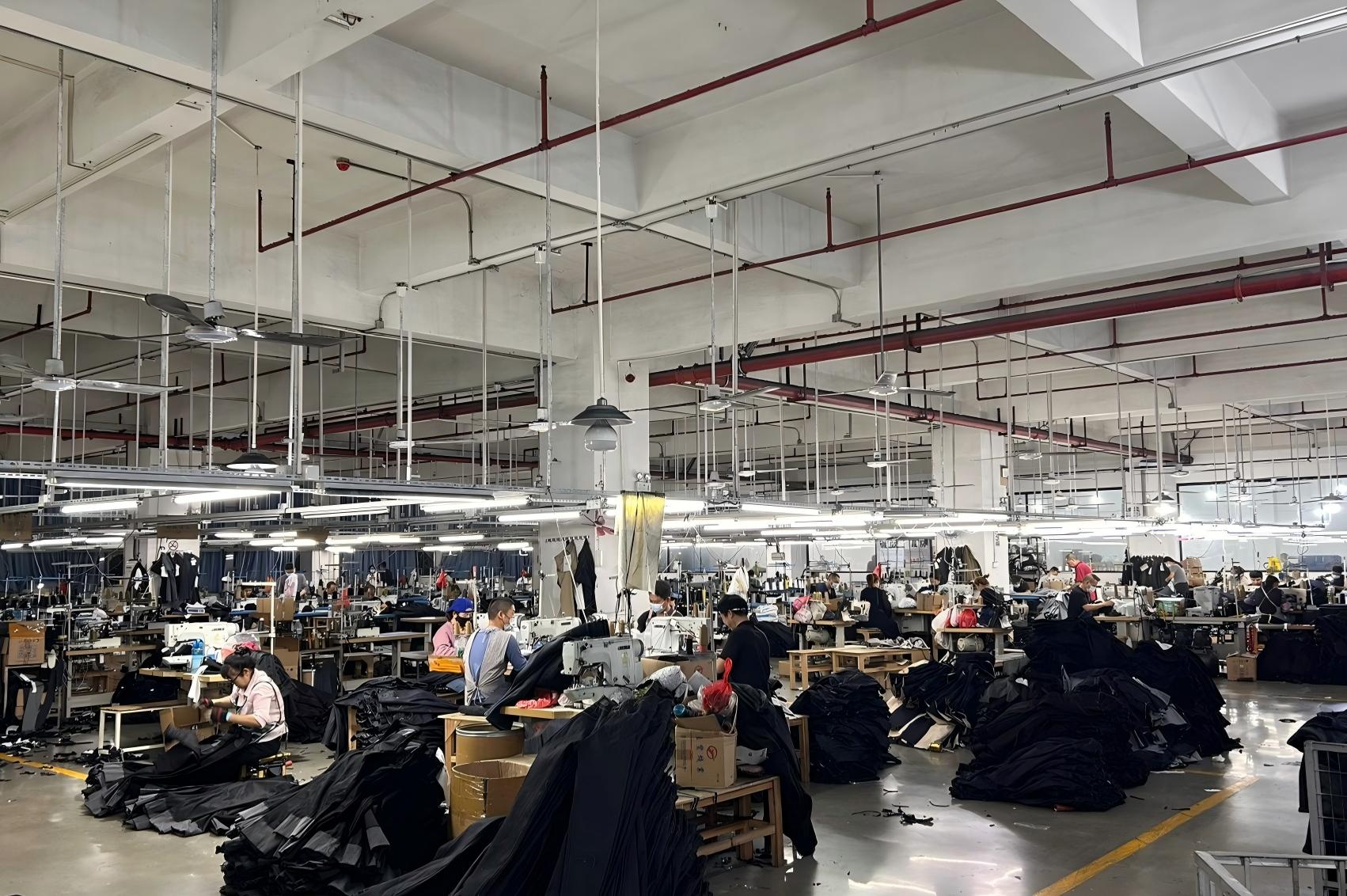
01 Industry Status: The Denim Sewing Sector at a Crossroads
The global sewing machine market was valued at approximately $5.8 billion in 2024 and is projected to reach $10.5 billion by 2033, with a Compound Annual Growth Rate (CAGR) of around 6.7% from 2025 to 2033.
As a significant component of this market, the production models and demands for denim apparel are undergoing deep changes. Faced with tightening environmental policies, shifting international dynamics, and rising labor costs, global denim manufacturing hubs are experiencing growing pains.
The 2023 financial report of a leading US denim apparel brand revealed a 56% year-on-year plunge in net profit. In the first half of 2024, the brand implemented a global workforce reduction of 10% to 15%.
This phenomenon reflects not just the plight of a single company but the structural challenges confronting the entire industry.
The global sewing machine market was valued at approximately $5.8 billion in 2024 and is projected to reach $10.5 billion by 2033, with a Compound Annual Growth Rate (CAGR) of around 6.7% from 2025 to 2033.
As a significant component of this market, the production models and demands for denim apparel are undergoing deep changes. Faced with tightening environmental policies, shifting international dynamics, and rising labor costs, global denim manufacturing hubs are experiencing growing pains.
The 2023 financial report of a leading US denim apparel brand revealed a 56% year-on-year plunge in net profit. In the first half of 2024, the brand implemented a global workforce reduction of 10% to 15%.
This phenomenon reflects not just the plight of a single company but the structural challenges confronting the entire industry.
02 Technological Revolution: Automation and Intelligence Become Mainstream
The most prominent trend is the accelerated shift towards automation and intelligence. According to research by the China Sewing Machinery Association, the industry has set a clear goal to "expedite the automation and intelligent transformation of products, aiming for automated equipment to constitute over 90% of the total."
This transformation is not occurring in isolation but is an inevitable response to the "small-batch, quick-response" production model. Take Xintang Town in Guangzhou's Zengcheng District as an example. At its peak, one out of every three jeans globally originated from this area.
After local enterprises adopted the flexible "small-batch, quick-response" manufacturing model, they could achieve delivery in as little as one week by splitting large orders into smaller batches for sequential production.
Intelligent sewing equipment has become the core tool for realizing this flexible production model. At the China International Sewing Machinery & Accessories Show held in Shanghai in 2025, numerous intelligent devices showcased the latest industry progress.
For instance, during a live demonstration of multi-layer denim fabric handling, 16 layers of thick denim were fed into a machine without encountering the common issues of jamming or wrinkling associated with traditional equipment.
The most prominent trend is the accelerated shift towards automation and intelligence. According to research by the China Sewing Machinery Association, the industry has set a clear goal to "expedite the automation and intelligent transformation of products, aiming for automated equipment to constitute over 90% of the total."
This transformation is not occurring in isolation but is an inevitable response to the "small-batch, quick-response" production model. Take Xintang Town in Guangzhou's Zengcheng District as an example. At its peak, one out of every three jeans globally originated from this area.
After local enterprises adopted the flexible "small-batch, quick-response" manufacturing model, they could achieve delivery in as little as one week by splitting large orders into smaller batches for sequential production.
Intelligent sewing equipment has become the core tool for realizing this flexible production model. At the China International Sewing Machinery & Accessories Show held in Shanghai in 2025, numerous intelligent devices showcased the latest industry progress.
For instance, during a live demonstration of multi-layer denim fabric handling, 16 layers of thick denim were fed into a machine without encountering the common issues of jamming or wrinkling associated with traditional equipment.
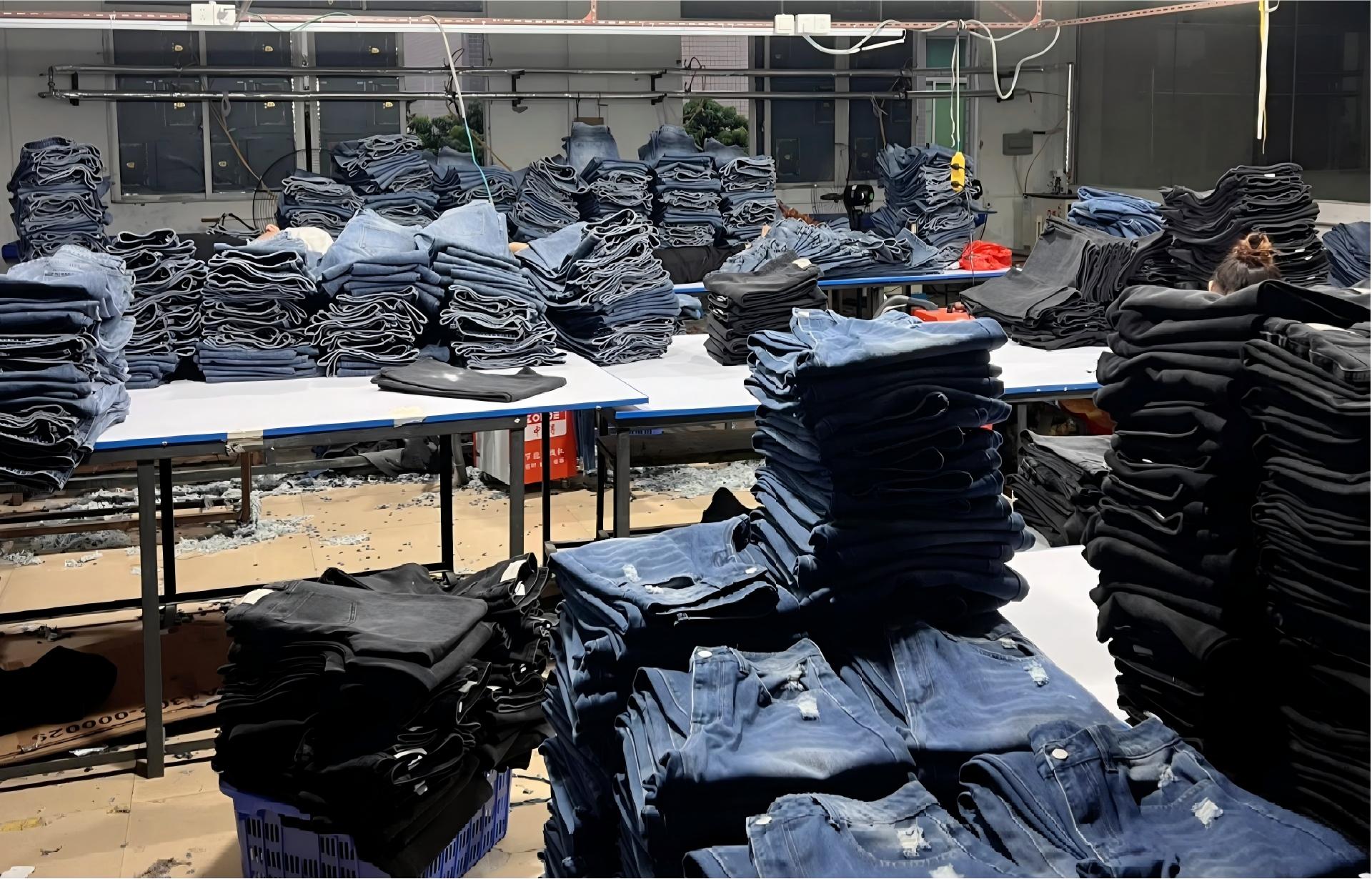
03 Market Drivers: Three Major Trends Reshaping the Industry Landscape
The development of the denim sewing industry is being influenced by three key trends: sustainable production, digital transformation, and evolving consumer demand.
Sustainability has become a central theme in the global fashion industry. Denim manufacturers are aiming to drastically reduce energy consumption during production, targeting a 50% reduction in water and energy usage.
An expert in the denim industry noted, "Denim continues to evolve with its unique versatility, transitioning from casual to elegant, and has become a significant pillar in the luxury sector. Today, it reflects our industry's shared vision: to merge exceptional quality, ecological responsibility, and innovative technology."
Digital transformation is evident in the intelligent upgrading of the entire industry chain. AI technology is reshaping the industry landscape, expanding from single-machine applications to full-process coordination. Some leading companies have already launched the world's first AI-powered sewing machines, breaking the technological monopoly traditionally held by German and Japanese brands.
Regarding consumer demand, there is a shift from a singular focus on fashion towards a greater emphasis on comfort, functionality, and personalization. Correspondingly, denim fabrics and processes are continuously evolving, now capable of integrating various new fibers such as mulberry silk, cashmere, viscose, and polyester.
The development of the denim sewing industry is being influenced by three key trends: sustainable production, digital transformation, and evolving consumer demand.
Sustainability has become a central theme in the global fashion industry. Denim manufacturers are aiming to drastically reduce energy consumption during production, targeting a 50% reduction in water and energy usage.
An expert in the denim industry noted, "Denim continues to evolve with its unique versatility, transitioning from casual to elegant, and has become a significant pillar in the luxury sector. Today, it reflects our industry's shared vision: to merge exceptional quality, ecological responsibility, and innovative technology."
Digital transformation is evident in the intelligent upgrading of the entire industry chain. AI technology is reshaping the industry landscape, expanding from single-machine applications to full-process coordination. Some leading companies have already launched the world's first AI-powered sewing machines, breaking the technological monopoly traditionally held by German and Japanese brands.
Regarding consumer demand, there is a shift from a singular focus on fashion towards a greater emphasis on comfort, functionality, and personalization. Correspondingly, denim fabrics and processes are continuously evolving, now capable of integrating various new fibers such as mulberry silk, cashmere, viscose, and polyester.
04 Product Innovation: KOLAM's Automated Sewing Solutions
In response to these industry changes, KOLAM has introduced a range of automated equipment specifically for denim sewing, designed to help manufacturers improve efficiency, reduce costs, and adapt to new market demands.
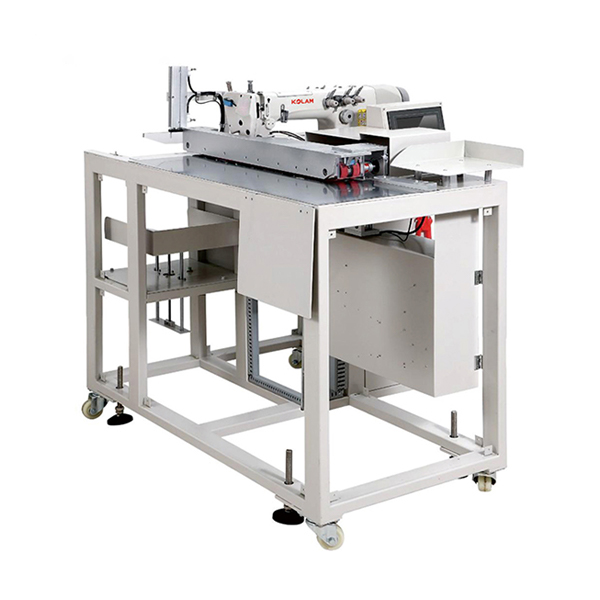
The KL-63900 Series Hemming Machine is specifically designed for hemming trouser bottoms and sleeves, automating complex processes that traditionally required highly skilled workers. In a "small-batch, quick-response" production model, this equipment significantly reduces debugging time when switching between different styles.
In response to these industry changes, KOLAM has introduced a range of automated equipment specifically for denim sewing, designed to help manufacturers improve efficiency, reduce costs, and adapt to new market demands.
The KL-63900 Series Hemming Machine is specifically designed for hemming trouser bottoms and sleeves, automating complex processes that traditionally required highly skilled workers. In a "small-batch, quick-response" production model, this equipment significantly reduces debugging time when switching between different styles.
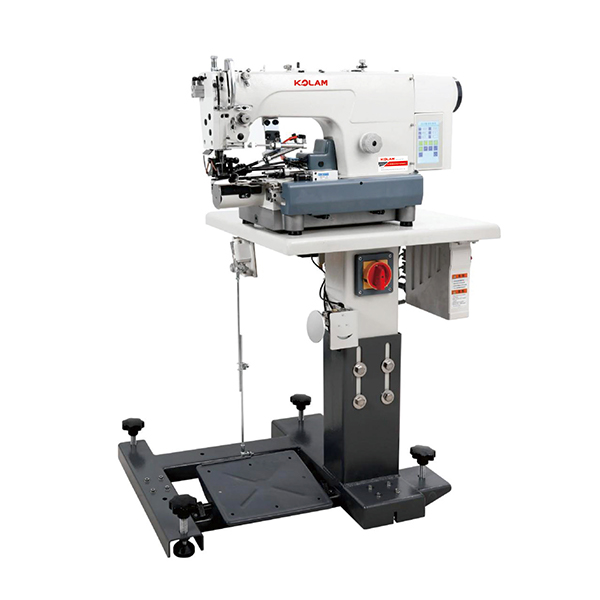
The KL-430-KP2 Single Needle Pants Loop Machine targets the belt loop (pants loop) sewing process for jeans, achieving automation and standardization. Through precise feeding and sewing control, the equipment ensures consistent dimensions for every loop, enhancing the overall product quality.
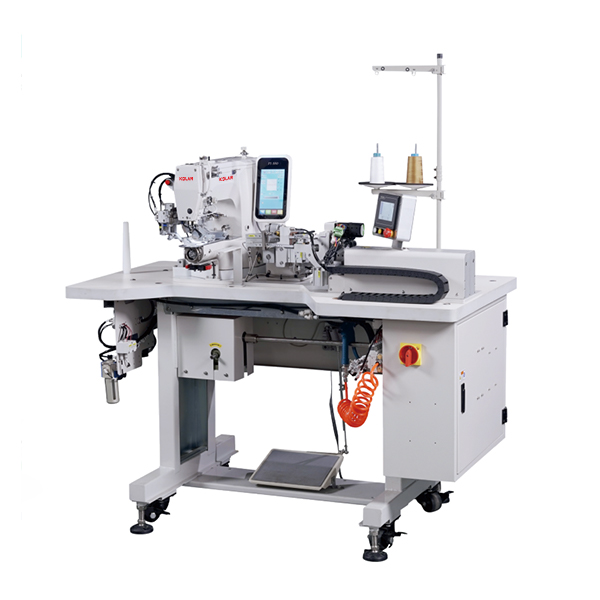
The KL-8720-5-DK Automatic Pocket Mouth Curling Machine focuses on the automated production of jeans pockets. Utilizing innovative curling technology and precise sewing control, this machine can handle various pocket styles, catering to the current market demand for diverse designs.

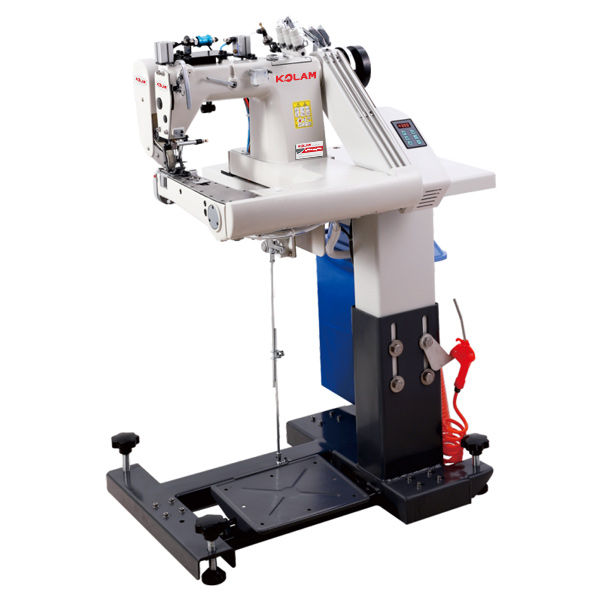
The KL-9588-EVC-T-DD Multifunction Feed-off-the-Arm Machine is a versatile device suitable for multiple sewing operations. Its design allows for quick changes of process modules, perfectly aligning with the needs of flexible production lines for small-batch, multi-variety production.
The KL-8338P-PLB Automatic Pocket Mouth Curling Machine further enhances the automation level in pocket making. This equipment is specially optimized for handling thicker denim fabrics, addressing common issues like fabric jamming and wrinkling during multi-layer denim sewing.
05 Future Outlook: The Integration of Intelligence and Green Production
Over the next three to five years, the sewing machinery industry is poised for significant breakthroughs in the integration of AI and sewing technology. The industry is committed to developing fully digitally driven and programmable control technologies, utilizing AI, smart sensing, fabric recognition, robotic-assisted sewing, and more.
The clear development goal for the industry has become: "Achieve a localization rate of over 70% for high-end sewing equipment and secure a 50% market share in the mid-to-high-end segment."
The integration of environmental technologies will also become a key feature of future equipment. The industry is exploring techniques to create vintage and worn effects on denim without using potassium permanganate, as well as technologies to prevent yellowing after bleaching by improving the blue hue of denim fabrics.
These innovations not only reduce environmental impact but also offer greater design possibilities.
Sustainability and intelligence are no longer just buzzwords but tangible survival strategies.
For denim manufacturers, investing in advanced automated sewing equipment is not only about improving current production efficiency but also about building production capabilities for the future.
Over the next three to five years, the sewing machinery industry is poised for significant breakthroughs in the integration of AI and sewing technology. The industry is committed to developing fully digitally driven and programmable control technologies, utilizing AI, smart sensing, fabric recognition, robotic-assisted sewing, and more.
The clear development goal for the industry has become: "Achieve a localization rate of over 70% for high-end sewing equipment and secure a 50% market share in the mid-to-high-end segment."
The integration of environmental technologies will also become a key feature of future equipment. The industry is exploring techniques to create vintage and worn effects on denim without using potassium permanganate, as well as technologies to prevent yellowing after bleaching by improving the blue hue of denim fabrics.
These innovations not only reduce environmental impact but also offer greater design possibilities.
Sustainability and intelligence are no longer just buzzwords but tangible survival strategies.
For denim manufacturers, investing in advanced automated sewing equipment is not only about improving current production efficiency but also about building production capabilities for the future.

In KOLAM's production demonstration workshop, an operator lightly taps the control panel, initiating a series of complex denim sewing operations automatically. The machines accurately identify the thickness and elasticity of the denim fabric, automatically adjusting sewing parameters to ensure every stitch is perfect.
Sewing equipment is transitioning from being auxiliary tools to becoming "teachers" that "master human experience." Driven by AI, they continuously learn, think, and identify areas for improvement in human-machine operation. This elevates the traditional denim manufacturing industry to new levels in efficiency, precision, and adaptability.
Sewing equipment is transitioning from being auxiliary tools to becoming "teachers" that "master human experience." Driven by AI, they continuously learn, think, and identify areas for improvement in human-machine operation. This elevates the traditional denim manufacturing industry to new levels in efficiency, precision, and adaptability.
Let KWONGLAM be the stable and powerful technological cornerstone of your global manufacturing footprint. Visit our website to discover how to customize an automation upgrade plan for your factory.
Contact us today for detailed specifications, a personalized quote, and to schedule an on-site demonstration.
Leading with Practical Technology, Sewing a Reliable Future.
KWONGLAM Sewing Parts – Reliability, Inspected and Delivered.
Facebook://www.facebook.com/kwonglamsew
Website://www.zjkwonglam.com/
Contact: 18906540868 (WhatsApp/WeChat)
Contact us today for detailed specifications, a personalized quote, and to schedule an on-site demonstration.
Leading with Practical Technology, Sewing a Reliable Future.
KWONGLAM Sewing Parts – Reliability, Inspected and Delivered.
Facebook://www.facebook.com/kwonglamsew
Website://www.zjkwonglam.com/
Contact: 18906540868 (WhatsApp/WeChat)


Redefining Future Manufacturing: How KOLAM Automation Solves the Three Core Pain Points of Shirt Production
A New Ecosystem for Global Knitting Intelligence: KWONGLAM Automation Solutions
Related Article

KOLAM launches its Seamless Sewing Machine Series to solve the challenges of "bonding and trimming", reduce reliance on skilled workers, lower costs and boost efficiency, and help enterprises enter the mid-to-high-end supply chain.
KOLAM Seamless Sewing Series: Redefining Cost Reduction through Certainty
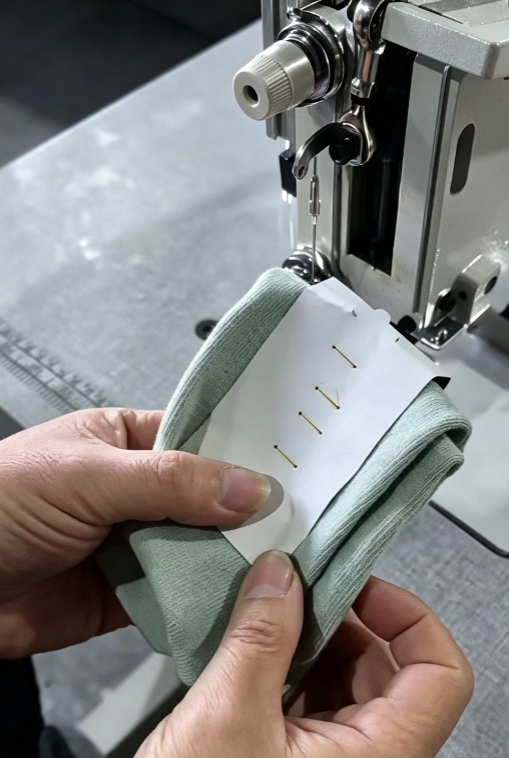
All three tag attaching machines are highly efficient and won't damage the fabric, effectively solving your current pain points.
Smart Tagging Solutions

Our upgraded button machine greatly cuts labor time and costs, delivering faster speed and higher efficiency. It fits various working scenarios, and we also have dedicated models specially designed for eyelet fastening.
Button Machine Gets a Full Makeover
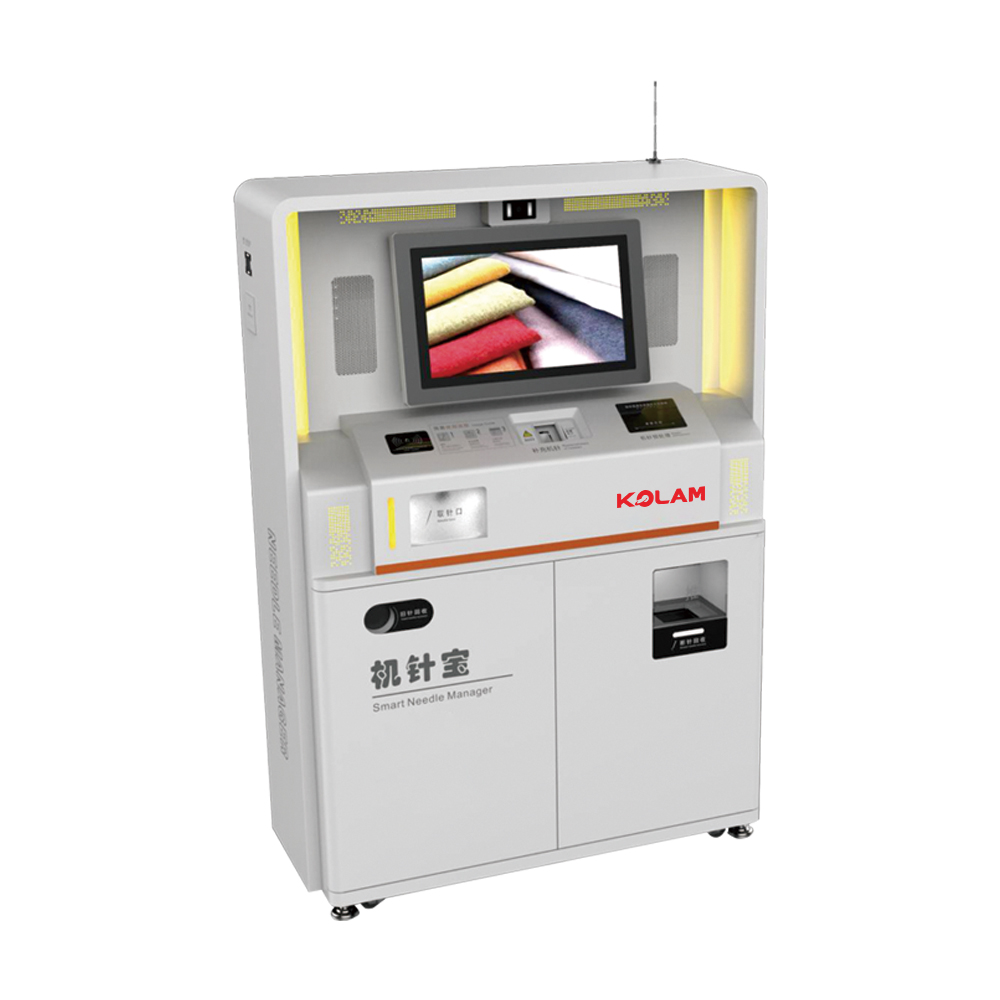
Our Smart Needle Management system provides precise, automated control over your sewing needle inventory, eliminating waste and unplanned downtime. Gain real-time data and visibility to cut needle costs by 20-35% and boost your factory's overall efficiency.
End Needle Waste with Smart Needle Management