The Future of Sewing Equipment Industry: An Analysis of Import and Export Trends, Development History, and Future Direction in 2024
author: Lily Shen
2024-12-18
This article provides comprehensive insights into the present and the future of the sewing equipment industry. The market is widely divided into four segments including pre-sewing and post-sewing equipment, industrial sewing machines, sewing machine website and intelligent control technology, and sewing machine accessories and spare parts. We explore the current import and export situation of the sewing market and its growth prospects in 2024. Further, we delve into the industry's development history and how it influenced modern-day manufacturing practices. Lastly, we examine the future development direction of the industry with a focus on the introduction of advanced technology, such as automatic sewing machines, and increasing customer demands for innovative products. Understanding the industry's current state and future outlook is crucial for business owners and investors looking to make informed decisions.
【Import and export situation of sewing equipment industry in 2024】
In 2024, the global economic recovery trend is steadily advancing, the United States and Europe are promoting interest rate cuts to further boost market confidence, and the demand for major international sewing equipment markets is accelerating, which has promoted the import and export activities of the sewing equipment industry.
In 2024, the global economic recovery trend is steadily advancing, the United States and Europe are promoting interest rate cuts to further boost market confidence, and the demand for major international sewing equipment markets is accelerating, which has promoted the import and export activities of the sewing equipment industry.

Export situation
According to data released by the General Administration of Customs, as of October 2024, the cumulative export value of sewing machinery products in my country is growing steadily. Among them, the export volume of industrial sewing machines, embroidery machines, pre-sewing and post-sewing equipment, and spare parts are all growing.
From the perspective of export markets, my country's exports of sewing machinery to local markets such as South Asia, ASEAN, Africa, Europe, and Latin America have all shown rapid year-on-year growth. For example, exports to South Asia were US$87.9 million, a year-on-year increase of 74.38%; exports to ASEAN were US$76.08 million, a year-on-year increase of 78.40%. At the same time, the export value of sewing machinery to markets such as Brazil, Bangladesh, Russia, Indonesia, Cambodia, and Egypt all showed double-digit growth year-on-year, among which the export value to markets such as Egypt, Singapore, Nigeria, and Ghana doubled year-on-year. However, exports to some regional markets in North America, East Asia, and Europe, such as the United States, Japan, Germany, Poland, Italy, and the Netherlands, have all shown varying degrees of decline year-on-year.
According to data released by the General Administration of Customs, as of October 2024, the cumulative export value of sewing machinery products in my country is growing steadily. Among them, the export volume of industrial sewing machines, embroidery machines, pre-sewing and post-sewing equipment, and spare parts are all growing.
From the perspective of export markets, my country's exports of sewing machinery to local markets such as South Asia, ASEAN, Africa, Europe, and Latin America have all shown rapid year-on-year growth. For example, exports to South Asia were US$87.9 million, a year-on-year increase of 74.38%; exports to ASEAN were US$76.08 million, a year-on-year increase of 78.40%. At the same time, the export value of sewing machinery to markets such as Brazil, Bangladesh, Russia, Indonesia, Cambodia, and Egypt all showed double-digit growth year-on-year, among which the export value to markets such as Egypt, Singapore, Nigeria, and Ghana doubled year-on-year. However, exports to some regional markets in North America, East Asia, and Europe, such as the United States, Japan, Germany, Poland, Italy, and the Netherlands, have all shown varying degrees of decline year-on-year.


KWONGLAM's exports of spare parts and sewing and embroidery machines have shown a gratifying growth this year. This achievement is inseparable from the hard work of our team. We have successfully won the trust and praise of customers by continuously improving product quality and launching innovative designs and services.
【The development history of the sewing equipment industry】
The development history of the sewing equipment industry is a struggle history of transformation from the traditional light industrial consumer goods industry to the advanced equipment manufacturing industry.
1. Starting stage
The development of China's sewing machinery industry can be traced back to the 1980s. In 1984, at the critical period of the country's transition from a planned economy to a market economy, the sewing machine industry faced dual challenges: on the one hand, the reform and opening-up policy made the price of sewing machine products fully liberalized, and the rapid growth of household sewing machine production led to market oversupply; on the other hand, with the rapid development of downstream industries such as clothing, shoes and hats, and luggage, the demand for domestic industrial sewing machines could not be met. In this context, the Ministry of Light Industry of the People's Republic of China judged the situation and guided the industry to transform from department management to industry management. The China Sewing Machine Association was formally established, marking that China's sewing machinery industry has entered a new stage of development.
2. Rapid development stage
In the new century, with the continuous deepening of economic system reform, especially my country's accession to the WTO, Beijing's successful bid for the Olympic Games, and a series of favorable factors such as the major adjustment of the world's clothing and sewing machinery industry, the sewing machinery industry has ushered in an opportunity for rapid development. In September 2001, with the approval of the Ministry of Civil Affairs, the China Sewing Machine Association was officially renamed the "China Sewing Machinery Association", opening a new journey for the industry in the "15th Five-Year Plan". During this stage, China's sewing machinery industry has achieved a transformation from household sewing machines to industrial sewing machines, and gradually developed towards high-speed industrial sewing machines. According to statistics, the number of sewing machinery enterprises in China has grown from dozens to about 800, and the number of parts enterprises has increased from hundreds to more than 1,000. The industry's annual industrial output value has increased to about 60 billion yuan, and 12 million sewing machines of various types have been produced, accounting for more than 85% of the world's output.
3. Transformation and upgrading stage
In recent years, China's sewing machinery industry has shown fluctuations in output, but has maintained steady growth overall. Under the careful guidance and unremitting efforts of the industry association, the industry has achieved leapfrog development from the traditional light industrial consumer goods industry to the advanced equipment manufacturing industry. Today, the industry already has a large number of intelligent sewing machinery products with independent intellectual property rights and core technologies, and has explored a variety of "sewing + Internet" operation and service models, and has initially built a sewing cloud platform industrial ecosystem based on the Internet of Things system.
In line with the development of the times, KWONGLAM has begun to implement the "sewing + Internet" operation and service model.(//www.zjkwonglam.com/)——KWONGLAM website
The development history of the sewing equipment industry is a struggle history of transformation from the traditional light industrial consumer goods industry to the advanced equipment manufacturing industry.
1. Starting stage
The development of China's sewing machinery industry can be traced back to the 1980s. In 1984, at the critical period of the country's transition from a planned economy to a market economy, the sewing machine industry faced dual challenges: on the one hand, the reform and opening-up policy made the price of sewing machine products fully liberalized, and the rapid growth of household sewing machine production led to market oversupply; on the other hand, with the rapid development of downstream industries such as clothing, shoes and hats, and luggage, the demand for domestic industrial sewing machines could not be met. In this context, the Ministry of Light Industry of the People's Republic of China judged the situation and guided the industry to transform from department management to industry management. The China Sewing Machine Association was formally established, marking that China's sewing machinery industry has entered a new stage of development.
2. Rapid development stage
In the new century, with the continuous deepening of economic system reform, especially my country's accession to the WTO, Beijing's successful bid for the Olympic Games, and a series of favorable factors such as the major adjustment of the world's clothing and sewing machinery industry, the sewing machinery industry has ushered in an opportunity for rapid development. In September 2001, with the approval of the Ministry of Civil Affairs, the China Sewing Machine Association was officially renamed the "China Sewing Machinery Association", opening a new journey for the industry in the "15th Five-Year Plan". During this stage, China's sewing machinery industry has achieved a transformation from household sewing machines to industrial sewing machines, and gradually developed towards high-speed industrial sewing machines. According to statistics, the number of sewing machinery enterprises in China has grown from dozens to about 800, and the number of parts enterprises has increased from hundreds to more than 1,000. The industry's annual industrial output value has increased to about 60 billion yuan, and 12 million sewing machines of various types have been produced, accounting for more than 85% of the world's output.
3. Transformation and upgrading stage
In recent years, China's sewing machinery industry has shown fluctuations in output, but has maintained steady growth overall. Under the careful guidance and unremitting efforts of the industry association, the industry has achieved leapfrog development from the traditional light industrial consumer goods industry to the advanced equipment manufacturing industry. Today, the industry already has a large number of intelligent sewing machinery products with independent intellectual property rights and core technologies, and has explored a variety of "sewing + Internet" operation and service models, and has initially built a sewing cloud platform industrial ecosystem based on the Internet of Things system.
In line with the development of the times, KWONGLAM has begun to implement the "sewing + Internet" operation and service model.(//www.zjkwonglam.com/)——KWONGLAM website
【Future development direction of the sewing equipment industry】
With the rapid development of industrial automation and the gradual development of artificial intelligence, combined with new technologies such as the Internet of Things, big data, and cloud computing, the sewing machinery industry is rapidly transforming from pure industrial machinery manufacturing to sewing intelligent equipment manufacturing and overall solutions.
With the rapid development of industrial automation and the gradual development of artificial intelligence, combined with new technologies such as the Internet of Things, big data, and cloud computing, the sewing machinery industry is rapidly transforming from pure industrial machinery manufacturing to sewing intelligent equipment manufacturing and overall solutions.
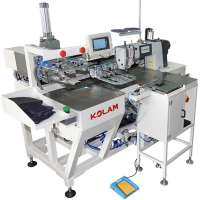
1. Intelligence and automation
In the future, intelligent sewing equipment has great potential in improving corporate production efficiency, product quality, reducing labor costs, and increasing factory profitability. Leading companies in the industry have transformed and upgraded to high value-added products, developing intelligent, automated sewing equipment, and automatic sewing units and other series of products to meet customer customization needs.
KWONGLAM has a full range of intelligent and automated sewing equipment.
//www.zjkwonglam.com/category-automatic-machine.html
2. Digitalization and networking
Digitalization reform is the future development direction of the sewing machinery industry. The industry will take digitalization as the direction and fully promote the intelligent transformation of "machine replacement" to achieve all-round optimization and upgrading of production equipment, process technology, product innovation, etc. At the same time, various acquisition and control sensors or controllers with perception and monitoring capabilities, as well as mobile communications, intelligent analysis and other technologies will be continuously integrated into all links of the sewing machinery production process to build a new industrial production and service system for the entire industry chain.
3. Greening and environmental protection
With the improvement of global environmental awareness, greening and environmental protection will become an important trend in the development of the sewing machinery industry. The industry will actively develop and promote environmentally friendly sewing equipment, reduce energy consumption and waste emissions in the production process, and promote sustainable development.
4. Internationalization and diversification
Internationalization is an inevitable trend in the development of the sewing machinery industry in the future. The industry will actively participate in international market competition and cooperation and exchange activities, expand overseas market channels and customer resources, and enhance international visibility and influence. At the same time, the industry will develop in a diversified manner, not only limited to the textile and clothing field, but also to furniture, leather, luggage and other fields to meet a wider range of market needs.
5. Standardization and modularization
In the future, the sewing machinery industry will pay more attention to standardization and modular development. By formulating unified technical standards and modular design, the versatility and interchangeability of products can be improved, production costs can be reduced, and production efficiency can be improved.
In the future, intelligent sewing equipment has great potential in improving corporate production efficiency, product quality, reducing labor costs, and increasing factory profitability. Leading companies in the industry have transformed and upgraded to high value-added products, developing intelligent, automated sewing equipment, and automatic sewing units and other series of products to meet customer customization needs.
KWONGLAM has a full range of intelligent and automated sewing equipment.
//www.zjkwonglam.com/category-automatic-machine.html
2. Digitalization and networking
Digitalization reform is the future development direction of the sewing machinery industry. The industry will take digitalization as the direction and fully promote the intelligent transformation of "machine replacement" to achieve all-round optimization and upgrading of production equipment, process technology, product innovation, etc. At the same time, various acquisition and control sensors or controllers with perception and monitoring capabilities, as well as mobile communications, intelligent analysis and other technologies will be continuously integrated into all links of the sewing machinery production process to build a new industrial production and service system for the entire industry chain.
3. Greening and environmental protection
With the improvement of global environmental awareness, greening and environmental protection will become an important trend in the development of the sewing machinery industry. The industry will actively develop and promote environmentally friendly sewing equipment, reduce energy consumption and waste emissions in the production process, and promote sustainable development.
4. Internationalization and diversification
Internationalization is an inevitable trend in the development of the sewing machinery industry in the future. The industry will actively participate in international market competition and cooperation and exchange activities, expand overseas market channels and customer resources, and enhance international visibility and influence. At the same time, the industry will develop in a diversified manner, not only limited to the textile and clothing field, but also to furniture, leather, luggage and other fields to meet a wider range of market needs.
5. Standardization and modularization
In the future, the sewing machinery industry will pay more attention to standardization and modular development. By formulating unified technical standards and modular design, the versatility and interchangeability of products can be improved, production costs can be reduced, and production efficiency can be improved.
In summary, the sewing equipment industry has achieved remarkable results in imports and exports in 2024, and the future development prospects are broad. With the promotion of trends such as intelligence, automation, digitalization, greening, internationalization, diversification, standardization and modularization, the sewing machinery industry will usher in a better tomorrow.
We are well aware that this achievement is inseparable from the support and trust of all our partners. Therefore, we sincerely thank you for your support in every aspect, which enables us to continue to expand and succeed in the market.
We will continue to uphold the customer-centric business philosophy, continuously improve product quality and service level, and work with you to create a better tomorrow.
We are well aware that this achievement is inseparable from the support and trust of all our partners. Therefore, we sincerely thank you for your support in every aspect, which enables us to continue to expand and succeed in the market.
We will continue to uphold the customer-centric business philosophy, continuously improve product quality and service level, and work with you to create a better tomorrow.
If you need to buy sewing machine,you could choose KWONGLAM!
【understand us】
Youtube://www.youtube.com/@kwonglam-2012
Facebook: //www.facebook.com/kwonglasew
Website://www.zjkwonglam.com/
Kwonglam Retail Machine: An Innovative Leader In The Wave Of Globalization
July Export Report: Opportunities and Challenges for Sewing Machine Industry
Related Article
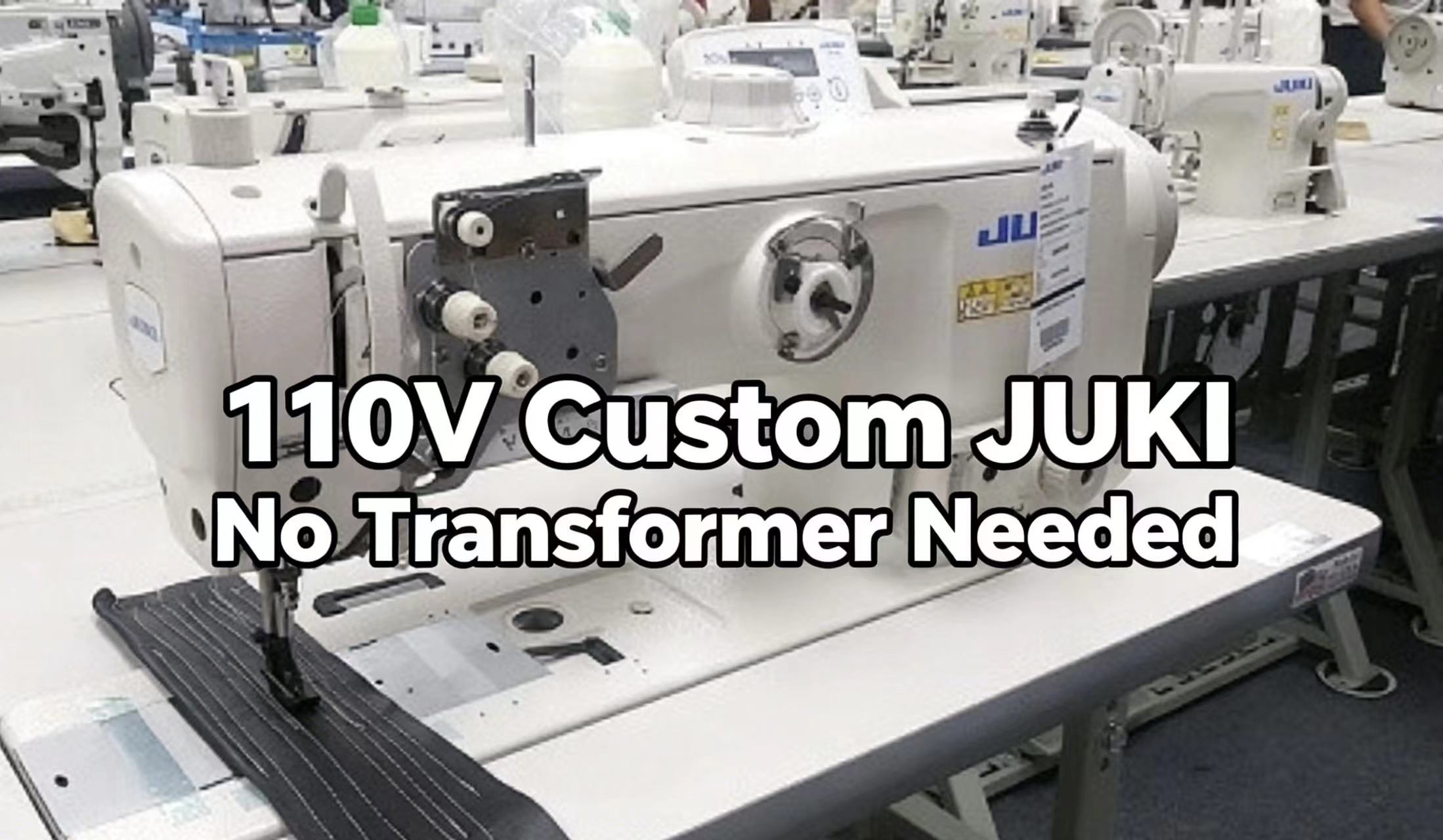
Need JUKI sewing machines for US voltage? We’ve got custom 110V JUKI units — no transformer needed!Featuring JUKI 7000A, DDL 8000A, and LU 2810, these work with 110V power right out of the box. Perfect for workshops, studios, custom sewing, and household projects. Reliable US sewing machines that keep your workflow smooth.
US Market Exclusive |JUKI 110V Voltage Customization Service